



Check out this article next
Florida's cost of living in 2026 is neither as cheap as some claim nor as expensive as others warn — the truth depends on where you live, what you buy, and what lifestyle you're coming from. This guide breaks down every major expense category with real numbers, including a complete monthly cost estimate for a typical $500,000 home purchase on Florida's Gulf Coast.
In this guide, you'll discover exactly what to budget for housing, property taxes, homeowners insurance, flood insurance, utilities, car insurance, HOA fees, CDD fees, groceries, and the Florida-specific maintenance costs most newcomers overlook — all organized into a clear, realistic monthly picture for 2026.
Frequently Asked Questions About the Cost of Living in Florida
What does it actually cost per month to live in Florida in 2026?
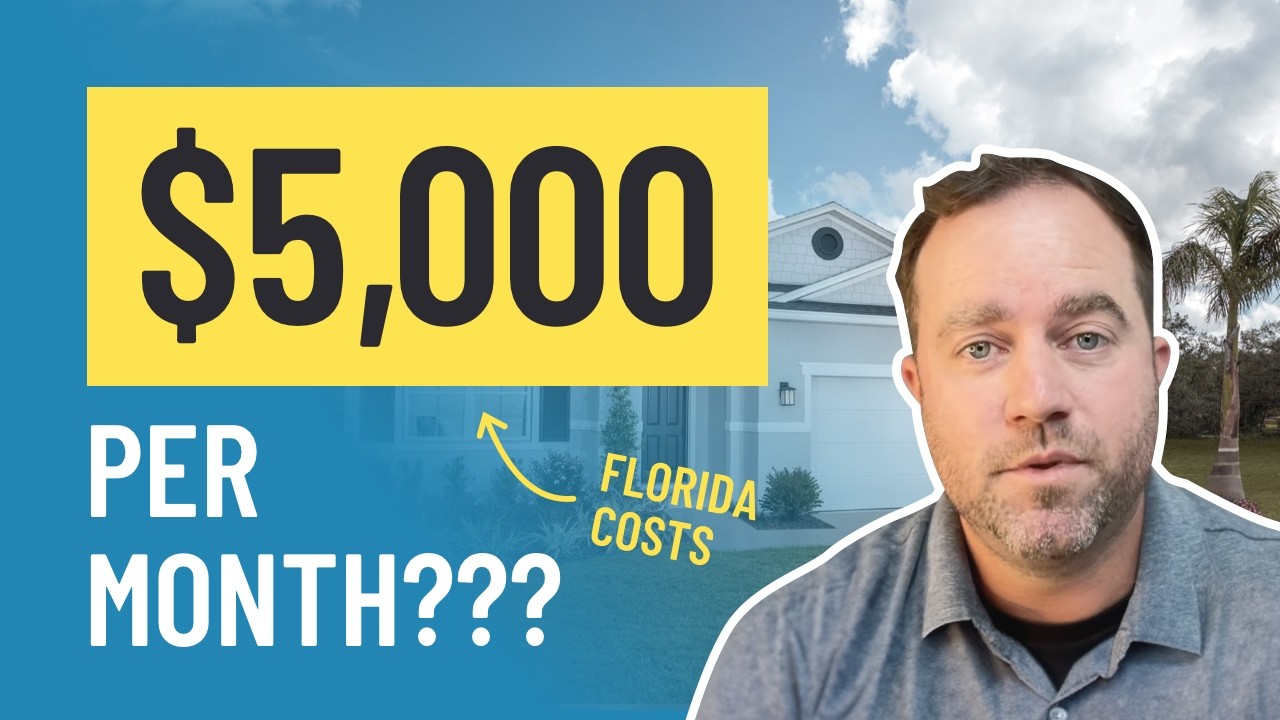
For a buyer purchasing a $500,000 home with 20% down, total monthly costs — including mortgage, taxes, insurance, utilities, car insurance, groceries, and basic maintenance — typically fall in the range of $5,000 to $5,600 per month. That number shifts depending on the community, HOA fees, CDD fees, and personal lifestyle choices.
Are property taxes high in Florida?
Florida property taxes are generally lower than those in many Northeast and Midwest states. A reasonable rule of thumb is 1% to 1.3% of the home's assessed value annually. On a $500,000 home, that works out to roughly $5,000 to $6,500 per year. Florida's homestead exemption reduces taxable value and limits annual increases for primary residents.
What is a CDD fee in Florida and do I have to pay it?
A CDD (Community Development District) fee is a special assessment that helps repay the infrastructure costs of building a newer master-planned community — roads, utilities, drainage, and amenities. It appears on your property tax bill rather than as a separate HOA charge, which means many buyers don't notice it until after closing. CDD fees typically run $1,500 to $3,000 per year in communities like Wellen Park and Lakewood Ranch.
How much is homeowners insurance in Florida?
Insurance costs vary significantly based on home age, roof age, flood zone, and wind mitigation features. New construction homes built to modern hurricane codes can sometimes come in under $2,000 per year. A typical resale home might cost $2,500 to $5,000 annually. Older homes near the coast with aging roofs can reach $6,000 to $8,000 or more per year.
Does Florida have state income tax?
No. Florida has no state income tax. For buyers relocating from high-income-tax states like New York, New Jersey, Illinois, or California, this single factor can save thousands of dollars per year — often offsetting much of the higher insurance and housing costs people encounter when they first arrive.
Why is car insurance so expensive in Florida?
Florida has some of the highest car insurance rates in the country. Two vehicles insured in Florida commonly run around $500 per month depending on the vehicles, drivers, and coverage levels. This is one of the costs that catches out-of-state buyers off guard most frequently.
What are the hidden monthly costs of living in Florida most people forget?
Florida has several routine maintenance costs that aren't typical in northern climates: lawn care ($75–$125/month), pool service ($100/month if applicable), and pest control (approximately $150/quarter or $50/month). These add a meaningful amount to the monthly budget that buyers accustomed to cold-weather climates sometimes fail to plan for.
Is Florida Really Affordable? The Honest Answer for 2026
If you've spent any time researching a Florida move online, you've probably seen two very different answers to this question. Some sources position Florida as one of the most affordable states in the country. Others argue costs have exploded and the affordability story is outdated. And here's the thing: both of those things can be true at the same time, depending on where you live and what your lifestyle looks like.
The cost picture in Florida in 2026 is genuinely nuanced. Housing and insurance have risen substantially over the past several years. Car insurance is among the most expensive in the nation. But the state still has no income tax, property taxes compare favorably to most Northeast and Midwest states, and everyday costs are often lower than what buyers are leaving behind in places like New York, New Jersey, California, or Illinois.
The most useful thing isn't a simple verdict of "cheap" or "expensive." It's a clear breakdown of every major cost category so you can build a realistic picture for your specific situation. That's exactly what this guide provides.
Housing: The Biggest Monthly Cost for Most Florida Buyers
Let's start with the foundation of any cost-of-living calculation: housing.
A very common and representative price point for buyers relocating to Florida's Gulf Coast — particularly the Sarasota and Manatee County area — is around $500,000. That's right at the current median for the region, making it a useful benchmark for a realistic monthly picture.
The Mortgage Payment
Assuming a 20% down payment on a $500,000 home:
- Down payment: $100,000
- Loan amount: $400,000
- Interest rate: approximately 6%
- Principal and interest payment: approximately $2,400 per month
That's the baseline mortgage payment — before taxes, insurance, or any community fees. Those costs come next.
Property Taxes in Florida: What to Actually Expect
Florida property taxes are genuinely competitive compared to most of the states where Gulf Coast buyers are relocating from. The rule of thumb across most of Florida is 1% to 1.3% of the home's assessed value per year.
On a $500,000 home, that translates to approximately $5,000 to $6,500 annually — or $420 to $540 per month.
The Homestead Exemption
If you're establishing Florida as your primary residence, the homestead exemption is one of the most important benefits available to you. It reduces your property's taxable value and activates a program called Save Our Homes, which caps how much your assessed value can increase each year.
One thing worth knowing: when you look at a home that's been owned for many years, you'll often see a tax bill that looks unusually low. That reflects years of capped increases under Save Our Homes — and it will not reflect what you'll pay as the new buyer. Your assessed value resets closer to market value at the time of purchase.
Florida Property Tax Reform: Watch This Closely
There is active discussion in Florida about significant property tax reform for primary homeowners. Some proposals under consideration could reduce property tax bills by as much as 50% for primary residents. As of 2026, it looks like this could appear on the ballot in November. If this passes, it would be a major development for long-term ownership costs in Florida — and would likely increase demand from buyers looking to establish primary residency here. This is worth monitoring closely before and after your move.
Homeowners Insurance in Florida: The Cost That Surprises People Most
There is no other single line item in Florida's cost of living that generates more surprise among incoming buyers than homeowners insurance. Florida's hurricane exposure, coastal weather, and the general state of the insurance market mean that coverage here costs meaningfully more than what most buyers are accustomed to in other states.
The actual cost depends heavily on the specific property — its age, roof age, flood zone, and what wind mitigation features are present. Here's how the ranges generally break down:
- New construction with impact windows, newer roof, modern hurricane codes: sometimes under $2,000/year
- Typical resale home: approximately $2,500 to $5,000 per year
- Older home, coastal proximity, aging roof, fewer wind mitigation features: $6,000 to $8,000 or more annually
To put a real number on it: one local broker's homeowners insurance on a non-new-construction home in the area runs $2,700 per year — roughly $225 per month. That's a useful data point for a mid-range estimate on a well-maintained resale home.
Flood Insurance: A Separate Consideration
Flood insurance is a separate policy from standard homeowners insurance, and whether you need it depends entirely on the FEMA flood zone designation of the specific property.
- Some homes — particularly those at higher elevations or in low-risk FEMA zones — don't require flood insurance at all
- Low-risk zone flood policies can often be obtained for under $1,000 per year
- Waterfront properties or homes in higher-risk zones can cost several thousand dollars annually, and in extreme cases significantly more depending on surge risk and elevation
Importantly, this is one of the costs that varies enormously from property to property and is worth verifying before going under contract. Your realtor and insurance agent should be able to help you identify the flood zone and get an estimate early in the process.
Utilities in Florida: Air Conditioning Drives the Budget
Florida utilities are primarily a story about one thing: air conditioning.
Unlike northern climates where heating costs dominate the winter budget, Florida's utility expenses are highest in summer when AC runs constantly. Here's a realistic breakdown:
- Summer months: electric bills commonly reach $250–$300 per month
- Winter months: electric bills drop significantly, sometimes to $100 per month or lower
- Annual average estimate: approximately $200 per month for electricity
Additional utility costs that are easy to forget:
- Natural gas (if applicable): approximately $100/month
- Water and sewer: approximately $100/month combined
- Internet: often under $50/month — Florida has competitive internet providers and most households have moved away from cable
A reasonable total monthly utility budget for a typical home is approximately $350–$450 per month.
HOA Fees and CDD Fees: Two Costs That Often Catch Buyers Off Guard
Many of Florida's most popular communities — including master-planned developments like Wellen Park and Lakewood Ranch — involve both HOA fees and CDD fees. Understanding the difference between these two charges, and what you're actually paying for, is essential for building an accurate monthly budget.
HOA Fees (Homeowners Association)
HOA fees in Florida cover community maintenance, common areas, and shared amenities. The range is wide:
- Smaller or older communities with basic coverage: under $100/month
- Master-planned communities with resort-style amenities: typically $300–$400/month
- Luxury or bundled golf communities: fees can reach $800–$1,000/month when golf membership is included
What those fees cover also varies. Some higher-fee communities include lawn maintenance, exterior upkeep, and roof coverage — which reduces the out-of-pocket costs you'd otherwise pay separately. Others cover amenities only. Evaluate HOA fees based on what's included, not just the dollar amount.
CDD Fees (Community Development District)
CDD fees are distinct from HOA fees and frequently overlooked by buyers — partly because they appear on the property tax bill rather than as a separate monthly charge.
A CDD is a special taxing district created to finance the infrastructure costs of developing a new community: roads, drainage, utilities, recreational facilities, and other improvements installed during the community's construction phase. Buyers essentially pay back that development cost over time.
CDD fees typically run $1,500 to $3,000 per year, or roughly $125 to $250 per month. Not every community has one, but most newer master-planned communities in Florida do. Always confirm whether a community you're considering has a CDD before comparing it to communities that don't — it's an apples-to-oranges comparison if you don't account for it.
Car Insurance in Florida: Higher Than Most States
This is a cost that consistently surprises buyers from other states: Florida has some of the highest car insurance rates in the country.
For two vehicles, a typical Florida resident might pay around $500 per month depending on vehicle types, driving history, ages of drivers, and coverage levels. That's a meaningful monthly expense that doesn't exist in the same way in many of the states where Gulf Coast buyers are relocating from.
This is worth factoring into your monthly budget before you arrive rather than after.
Florida-Specific Home Maintenance Costs: The Ones People Forget
Florida's climate creates a set of routine maintenance expenses that are either nonexistent or much lower in northern climates. These aren't dramatic costs individually, but they add up as consistent monthly line items:
- Lawn care: typically $75–$125 per month — year-round grass growth means year-round lawn service for most households
- Pool service: approximately $100 per month if your home has a pool (a very common feature in Florida)
- Pest control: approximately $150 per quarter — warm, humid Florida is excellent habitat for insects, and regular service is standard practice here
Combined, these three costs typically add $175–$275 per month to a Florida household's maintenance budget.
Groceries and Everyday Expenses
For everyday shopping, Publix is the dominant grocery chain across Florida and is the go-to store for most residents. It offers a consistently good selection and strong prepared food options, but it is also known for being priced slightly higher than national discount chains.
A reasonable Publix grocery budget for a household is approximately $150 per week, or $600 per month. Shopping at local markets, discount grocers, or sourcing from local farms and seasonal produce stands can potentially reduce that figure by 20–30%.
Overall, everyday living expenses in Florida — dining, entertainment, personal care — are broadly comparable to or slightly lower than major metros in the Northeast and on the West Coast. Florida is not the cheapest place to shop or eat out, but the difference relative to places like New York, Boston, or San Francisco is meaningful in favor of Florida.
Putting It All Together: A Complete Monthly Budget for a $500,000 Florida Home
Here is a realistic monthly cost summary for a buyer purchasing a $500,000 home on Florida's Gulf Coast in 2026, with 20% down at approximately 6% interest:
Expense Category | Estimated Monthly Cost |
Mortgage (P&I, $400K at 6%) | ~$2,400 |
Property taxes | ~$450 |
Homeowners insurance | ~$225 |
Utilities (electric, gas, water, internet) | ~$400 |
Car insurance (2 vehicles) | ~$500 |
Groceries | ~$600 |
Lawn care, pool service, pest control | ~$200 |
Subtotal (before HOA/CDD) | ~$4,775 |
HOA fees (master-planned community, mid-range) | +$300–$400 |
CDD fees (if applicable) | +$125–$250 |
Dining out and entertainment | +$200–$400 |
Estimated total monthly lifestyle cost | $5,000–$5,600+ |
This range will move meaningfully depending on:
- The community and its specific HOA/CDD structure
- Home age and insurance profile
- Number of vehicles and coverage levels
- Personal lifestyle spending on dining, travel, and entertainment
Why Florida Still Makes Financial Sense for Many Buyers in 2026
Looking at a $5,000 to $5,600 monthly cost estimate, it's fair to ask: is that actually a good deal?
For many buyers — particularly those relocating from New York, New Jersey, California, Illinois, or other high-cost, high-tax states — the answer is yes, and often emphatically so. Here's why:
Florida has no state income tax. For a household earning $150,000 per year, eliminating state income tax can save anywhere from $5,000 to $15,000 annually compared to living in a high-income-tax state. That's $400 to $1,250 per month that effectively offsets the higher insurance and housing costs.
Combine the income tax savings with property taxes that compare favorably to the Northeast, everyday expenses that are lower than major metros, and a climate that reduces costs in categories like home heating, winter clothing, and cold-weather vehicle maintenance — and the financial case for Florida often holds up well under scrutiny.
Florida isn't cheap in absolute terms. But for the right buyer, in the right location, the complete financial picture tends to be more attractive than the headline housing and insurance numbers suggest on their own.
In Summary: What It Really Costs to Live in Florida in 2026
The honest answer to "how expensive is Florida?" is: it depends — but here are the key facts.
For a $500,000 home purchase on Florida's Gulf Coast with 20% down, expect a total monthly cost of $5,000 to $5,600, depending on community, lifestyle, and coverage choices. The biggest variables are insurance (driven by home age and features), HOA and CDD fees (driven by community type), and car insurance (higher than most states regardless of driving history).
The most important cost-offsetting factor is no state income tax — a benefit that is difficult to overstate for buyers coming from high-income-tax states.
Understanding all of these numbers before you move — not after — is how you set yourself up to enjoy everything that Florida's Gulf Coast has to offer without financial surprises.
Ready to Understand the Full Financial Picture of Moving to Florida?
If you're considering relocating to Florida's Gulf Coast and want expert guidance navigating the real cost of living, neighborhoods, and housing market, the Zachos Realty & Design Group is here to help. With over 40 years of combined local expertise and a unique combination of real estate knowledge and award-winning design vision, we can help you find the perfect property that matches your lifestyle and your budget.
Contact us today:
- Phone: 941-500-5457
- Email: [email protected]
- Sarasota Office: 205 N Orange Ave Suite 202, Sarasota, Florida 34236
- Venice Office: 217 Nassau St S, Venice, FL 34285
Visit our YouTube channel "Relocation Experts | Florida's Gulf Coast" for more insider guides to Florida's Gulf Coast communities. And don't forget to download our free Florida Tax Guide — the link is in the video description.