


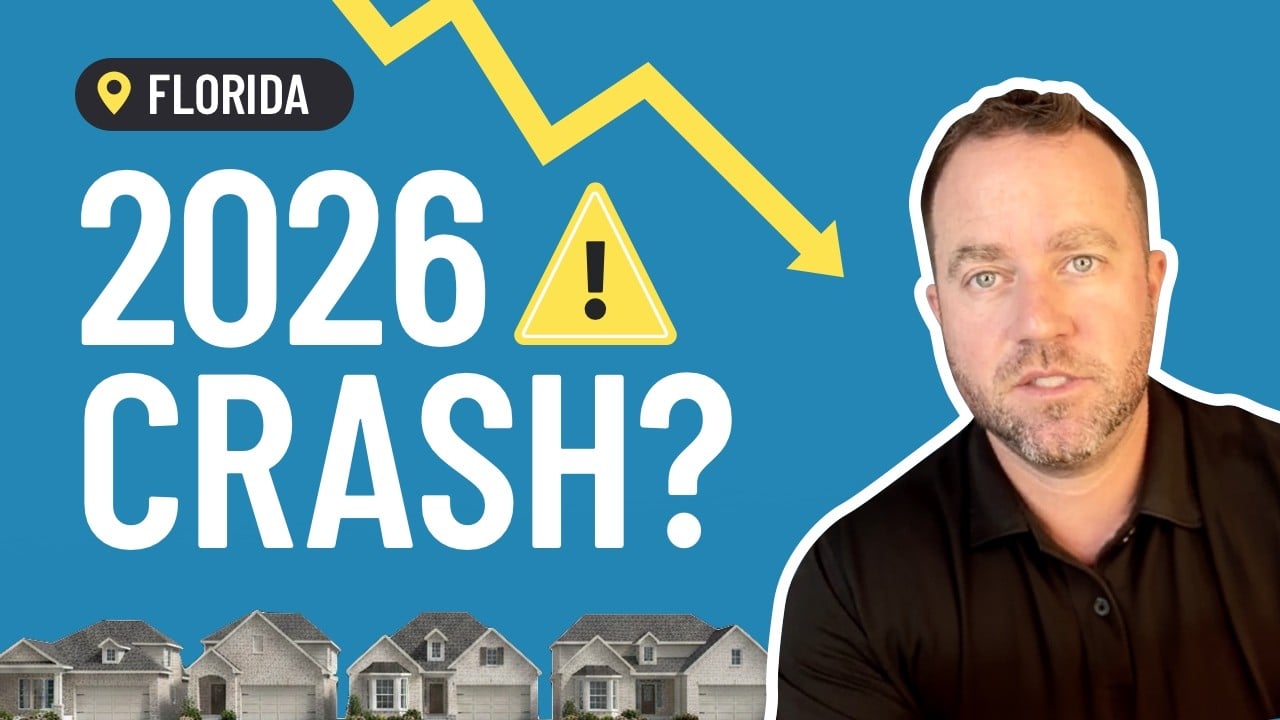
Florida isn't heading toward a single real estate crash in 2026—it's experiencing a market-wide sorting where some areas face mounting pressure while others remain fundamentally strong. With statewide inventory climbing to 6.5 months of supply, 44% of listings seeing price reductions, and homes taking 90+ days to sell, the Sunshine State's real estate landscape looks dramatically different from the pandemic boom years of 2020-2022.
Understanding where pressure is building and which markets are positioned for stability isn't about timing a crash—it's about choosing the right type of market for your long-term goals. Whether you're considering relocating to Florida now or planning a move in the coming years, recognizing these patterns can help you make a smarter, more strategic decision about where to call home.
Frequently Asked Questions About Florida's 2026 Real Estate Market
Is Florida's real estate market going to crash in 2026?
Florida isn't heading toward a single statewide crash but rather a market-wide sorting. Some areas—particularly investor-driven markets and older coastal condos—face significant pressure from rising inventory, increased ownership costs, and softening demand. However, lifestyle-driven markets with strong fundamentals and end-user demand are positioned to remain stable heading into 2026.
Which Florida markets are most at risk in 2026?
The most exposed markets include investor-heavy areas like Cape Coral, Lehigh Acres, and parts of Kissimmee/Davenport where speculation drove prices during the pandemic boom. Older coastal condo markets across Southwest Florida and vacation rental-driven areas like Daytona Beach and select panhandle communities also face challenges due to rising HOA fees, insurance costs, and special assessments that have fundamentally changed ownership economics.
What Florida areas are best positioned for 2026 and beyond?
Lifestyle-driven markets where people buy to live long-term—not flip or rent short-term—are holding up best. The Sarasota area, select Gulf Coast lifestyle hubs with strong healthcare, culture, and walkability, and underrated secondary markets like Port St. Lucie, Palm Coast, and Clermont show more balanced fundamentals. These areas feature slower inventory growth, less aggressive price reductions, and buyers planning to stay 5-20+ years.
What are the key signals that Florida's market is changing?
Statewide inventory has risen to approximately 6.5 months of supply (up from extreme scarcity during 2020-2022), average home values are down about 5% year-over-year to around $350,000, median days on market has extended into the 90-day range, nearly 44% of listings are seeing price reductions, and new construction increasingly relies on incentives like rate buydowns and closing cost credits rather than raw demand.
Should I wait to buy in Florida or purchase now?
The smart move isn't trying to time the market bottom—it's choosing the right type of market. Markets driven by speculation and investor demand are most exposed when conditions change, while markets driven by lifestyle, long-term ownership, and real end-user demand tend to hold up far better. Focus on areas that align with your lifestyle, budget, and long-term goals rather than waiting for a crash that may never materialize in stronger markets.
What's driving the increased pressure in Florida coastal condo markets?
Older coastal condo buildings are experiencing significant increases in total ownership costs. HOA fees have risen dramatically, insurance premiums have doubled or more in many cases over the past few years, reserve funding requirements have increased, and special assessments have become more common. While demand for coastal living hasn't disappeared, these rising costs have become dealbreakers for many buyers, resulting in longer days on market and more frequent price reductions.
How has Florida's new construction market changed heading into 2026?
New construction is still moving throughout Florida, but much of that movement is being supported by builder incentives rather than organic demand. Rate buydowns, closing cost credits, and quiet base price flexibility are doing more work than raw buyer urgency in many areas. This represents a shift from the pandemic years when builders could command premium prices with minimal concessions.
Understanding Florida's Statewide Market Shift
The Florida real estate market has fundamentally transformed from the extreme seller's market conditions that defined the pandemic years. Across the state, inventory levels have risen to approximately 6.5 months of supply—a dramatic shift from the severe scarcity buyers faced during 2020, 2021, and into 2022. This inventory level is historically associated with more balanced market conditions, where buyers regain leverage and sellers must compete more actively for offers.
Average home values across Florida now sit around $350,000, down roughly 5% year-over-year. This moderation doesn't signal collapse—it indicates the market is no longer overheated. Prices are adjusting to new economic realities rather than free-falling. The frenzied bidding wars and instant offers that characterized recent years have given way to more measured buyer behavior.
Perhaps most telling is how long homes now take to sell. The median days on market across Florida has moved into the 90-day range, a significant increase from the rapid turnover of previous years. This extended timeline reveals that urgency has cooled considerably. Buyers are taking their time, conducting thorough research, and shopping strategically rather than making fear-driven offers.
One of the clearest adjustment signals appears in listing price reductions. Nearly 44% of listings statewide are experiencing some form of price cut as sellers adapt to current market realities. This high percentage of reductions demonstrates that initial asking prices often don't align with what today's buyers are willing to pay, forcing sellers to recalibrate their expectations.
The new construction segment tells a similar story. While builders are still moving inventory, much of that movement now depends on incentives. Rate buydowns, closing cost credits, and subtle base price flexibility are doing more heavy lifting than raw demand in certain areas. This contrasts sharply with the pandemic years when builders could command premium prices with minimal concessions.
Where Pressure Shows Up First: Markets Most Exposed in 2026
When market conditions shift, pressure doesn't distribute evenly across Florida. Certain types of markets consistently prove more vulnerable during transitional periods. Understanding these patterns—which repeat every market cycle—helps identify where risk concentrates as we move into 2026.
Investor-Driven Markets Face the Biggest Headwinds
The areas most exposed heading into 2026 are those heavily driven by investor demand during the pandemic boom. These markets experienced rapid price appreciation, accumulated inventory quickly, and attracted buyers motivated more by cheap borrowing costs and short-term rental income potential than by long-term owner-occupancy plans.
Key investor-heavy markets showing pressure include:
- Cape Coral and Lehigh Acres in Southwest Florida – These areas saw massive investor activity during the boom years, with many properties purchased for speculation or short-term rentals
- Central Florida investor zones around Kissimmee and Davenport – Properties near theme parks attracted heavy short-term rental investment
- Vacation rental-driven coastal markets – Areas like Daytona Beach and select panhandle communities that primarily catered to vacation rental investors
These markets functioned exceptionally well when specific conditions aligned: extremely low borrowing costs made financing cheap, inventory remained scarce creating urgency, and insurance costs hadn't yet emerged as a major budget factor. However, today's environment features higher inventory levels, softening rental income numbers, rising insurance premiums, and elevated borrowing costs—making these investor-dependent markets far more sensitive to changing conditions.
The challenge in these areas isn't necessarily that they're "bad" markets—it's that their recent growth was disproportionately fueled by investor activity rather than organic, long-term resident demand. When investors pull back or struggle with rental economics, these markets lack the stable base of owner-occupants to maintain price stability.
Older Coastal Condo Markets Under Mounting Cost Pressure
The second major pressure point emerges in older coastal condo markets throughout Florida. Many established condo buildings face a perfect storm of rising ownership costs that have fundamentally altered purchase decisions for potential buyers.
Significantly increased HOA fees, skyrocketing insurance premiums, new reserve funding requirements, and special assessments have changed the total cost of ownership equation. In many cases, these costs have doubled or more over the past few years. What once seemed like an affordable coastal lifestyle option now requires substantially higher monthly outlays beyond the mortgage payment alone.
This cost pressure concentrates particularly in:
- Older coastal condo corridors across Southwest Florida – Buildings constructed 30-50 years ago facing substantial maintenance and reserve funding needs
- Select vacation-driven markets – Daytona Beach, portions of the panhandle, and other areas where older condo inventory dominates
- Buildings requiring major repairs or updates – Properties facing assessments for structural repairs, roof replacements, or building system upgrades
Importantly, demand for coastal living hasn't disappeared. People still want beach access, waterfront views, and the Florida coastal lifestyle. However, the economics have shifted dramatically enough that total monthly costs have become dealbreakers for many would-be buyers who might have purchased these properties just a few years ago.
This explains why these segments now experience longer days on market and more frequent price reductions. Sellers must adjust asking prices to account for the higher ongoing costs buyers will face, essentially capitalizing those increased expenses into lower purchase prices.
New Construction Markets Dependent on Incentives
The third area showing pressure involves markets where new construction dominates but sales increasingly rely on builder incentives rather than organic pricing power. While homes continue selling in these areas, builders now routinely offer rate buydowns, substantial closing cost credits, and quiet flexibility on base prices to move inventory.
This pattern indicates that appreciation is no longer automatic. Builders must compete more aggressively, and their margins face pressure. For buyers, this creates opportunities but also signals that rapid appreciation shouldn't be expected in the near term.
These markets aren't necessarily broken overall, but they represent areas where supply has caught up with or exceeded immediate demand, forcing builders to use incentives to maintain sales velocity.
Markets Positioned for Stability and Strength in 2026
While crash-focused content emphasizes only risk and pressure points, the complete picture of Florida's 2026 market outlook includes areas genuinely positioned well for the year ahead. These markets share common characteristics that historically provide stability even when broader conditions remain uncertain.
Lifestyle-Driven, End-User Markets Show Resilience
The strongest Florida markets heading into 2026 are lifestyle-driven areas where people buy homes to live in long-term—not to flip for quick profits or operate as short-term rentals. These end-user markets feature buyers planning to stay 5, 10, or even 20+ years, creating stable demand that doesn't evaporate when speculation cools or rental economics soften.
In these markets, inventory has risen more slowly and remains more balanced rather than flooding the market. Price reductions occur less frequently and tend to be less aggressive. Most importantly, the buyer pool consists primarily of people making permanent relocation decisions based on lifestyle preferences, family needs, and long-term plans rather than investment calculations.
A prime example is the Sarasota area, which fits this model exceptionally well. The region attracts buyers drawn by cultural amenities, healthcare access, dining and entertainment options, walkable neighborhoods, and strong community infrastructure. These aren't temporary attractions—they represent the foundation of daily life for year-round residents.
Similar stability appears in select Gulf Coast lifestyle hubs that offer:
- Excellent healthcare access – Comprehensive hospital systems and specialized medical care that matters particularly to retirees and families
- Cultural amenities – Theaters, museums, galleries, and performing arts venues that enrich daily life
- Walkability and community design – Neighborhoods where people can walk to restaurants, shops, and services rather than driving everywhere
- Strong infrastructure – Well-maintained roads, quality schools, parks, and public services
These markets don't rely on hype or speculation to function. They work because people genuinely want to live there year-round, creating durable demand that persists through market cycles.
Underrated Secondary Markets With Strong Fundamentals
Beyond the well-known lifestyle destinations, several underrated secondary markets across Florida show encouraging long-term trends heading into 2026. These areas benefit from steady migration patterns, relative affordability compared to higher-cost markets, less investor saturation, and healthier overall fundamentals.
Key secondary markets positioned well include:
- Port St. Lucie – Benefits from population growth, proximity to Palm Beach County, and relative affordability while maintaining quality infrastructure
- Palm Coast – Attracts steady migration from the Northeast, offers coastal access at more moderate prices, and features strong community planning
- Clermont – Positioned in the Orlando metro area but maintains more balanced growth with less investor concentration
- Venice – Provides Gulf Coast access with small-town character, strong community feel, and growing amenities
These markets may not generate headlines or social media buzz, but they're positioned for stability—and that matters tremendously heading into 2026. They attract long-term residents rather than speculators, maintain reasonable price points relative to incomes, and feature genuine community infrastructure rather than just new construction sprawl.
The lack of excessive investor activity during the boom years actually benefits these areas now. They didn't see the same speculative price spikes, so they don't face the same degree of correction pressure. Their growth has been steadier and more sustainable.
The Smart Strategy for Florida Relocation in 2026
The biggest mistake potential Florida buyers make heading into 2026 is waiting for a crash instead of understanding where actual risk lies within the state. This approach often causes people to miss opportunities in strong markets while potentially exposing themselves to weaker markets when they eventually do purchase.
The smart move going into 2026 isn't trying to perfectly time the market bottom across all of Florida. It's choosing the right type of market for your specific situation.
Understanding Market Types, Not Market Timing
Markets driven by speculation, cheap money, and investor demand have always been most exposed when conditions change. This pattern repeats every real estate cycle—not because these areas are fundamentally flawed, but because their recent growth was built on less stable foundations.
When borrowing costs rise, rental economics deteriorate, and speculative money pulls back, these markets naturally face more significant adjustments. Buyers who purchased in these areas expecting continued rapid appreciation may find themselves disappointed or even underwater if they need to sell in the near term.
Conversely, markets driven by lifestyle considerations, long-term ownership plans, and genuine end-user demand tend to hold up far better even when headlines turn scary. These areas might not appreciate as dramatically during boom times, but they also don't correct as severely during adjustments.
This difference between choosing based on market type rather than market timing represents the gap between guessing and planning. Guessing involves trying to predict exactly when prices will bottom across all of Florida. Planning involves understanding which types of markets align with your goals and which types carry more risk given your timeline and circumstances.
Aligning Market Selection With Your Relocation Goals
When evaluating where to relocate in Florida heading into 2026, consider these key questions:
Are you buying to live long-term or as an investment? If you're planning to live in the property for 10+ years, short-term market fluctuations matter less than finding the right community, lifestyle, and home. If you're investing or might need to sell within 3-5 years, market type becomes more critical.
What lifestyle factors matter most to you? Prioritize areas that genuinely fit your daily life preferences—walkability, cultural amenities, healthcare access, community feel—rather than areas that simply seem like "good investments." You'll be living in this community, not just owning a property there.
What's your budget for total ownership costs? Beyond the mortgage payment, factor in insurance premiums (which vary dramatically by location and property type), HOA fees, property taxes, and maintenance costs. A seemingly affordable purchase price might come with ownership costs that strain your budget.
How important is market stability versus appreciation potential? Some buyers prioritize areas with stable, predictable values even if appreciation is modest. Others want markets with higher growth potential and accept more volatility. Neither approach is wrong—but they lead to different market selections.
Making Informed Decisions With Local Expertise
Florida's 2026 market demands more nuanced analysis than national headlines can provide. Statewide statistics don't reveal which specific neighborhoods within an area are performing better, what hyperlocal factors might affect a particular community, or how individual properties compare within their markets.
Working with real estate professionals who specialize in Florida relocation and deeply understand local market dynamics provides invaluable perspective. They can help you navigate beyond the macro trends to identify specific opportunities that align with your personal circumstances, timeline, and goals.
The key is approaching Florida's 2026 market with clear eyes—acknowledging both the areas under pressure and the markets positioned well, understanding your own priorities and timeline, and making location decisions based on comprehensive analysis rather than fear or speculation.
Conclusion: Navigating Florida's Market Sorting in 2026
Florida's real estate market isn't heading uniformly toward collapse or continued boom—it's experiencing a fundamental sorting where market types diverge. Investor-heavy areas face mounting pressure from rising inventory, softening rental economics, and increased ownership costs. Older coastal condos struggle with dramatically higher HOA fees, insurance premiums, and special assessments that change purchase economics. New construction markets increasingly depend on builder incentives rather than organic demand.
At the same time, lifestyle-driven markets with strong end-user demand, quality infrastructure, and long-term resident bases show resilience heading into 2026. Secondary markets with balanced fundamentals and less speculative activity maintain stability. These areas work because people genuinely want to live there year-round, creating durable demand that persists through market adjustments.
The difference between successful and problematic Florida relocations in 2026 won't be about timing the absolute bottom of the market. It will be about understanding these market type distinctions and choosing areas aligned with your lifestyle needs, budget realities, and long-term plans. This represents the difference between strategic planning and speculation—and that difference matters more than ever as Florida's market continues evolving.
Ready to Explore Florida's Gulf Coast With Expert Guidance?
If you're considering relocating to Florida's Gulf Coast or anywhere else in the Sunshine State, the Zachos Realty & Design Group is here to help. With over 40 years of local expertise and a unique combination of real estate knowledge and award-winning design vision, we can help you navigate Florida's 2026 market complexities and find the perfect property that matches your lifestyle needs.
Our team has completed over 400 real estate transactions representing more than $150 million in successful property sales, placing us in the top 5% of agents nationwide. We deeply understand the nuances of different Florida markets—which areas are positioned well, which face pressure, and how to identify opportunities that align with your specific situation.
Contact us today:
- Phone: 941-500-5457
- Email: [email protected]
- Sarasota Office: 205 N Orange Ave Suite 202, Sarasota, Florida 34236
- Venice Office: 217 Nassau St S, Venice, FL 34285
Visit our YouTube channel "Relocation Experts | Florida's Gulf Coast" for more insider guides to Florida's Gulf Coast communities and market analysis that helps you make informed relocation decisions.
Check out this article next