


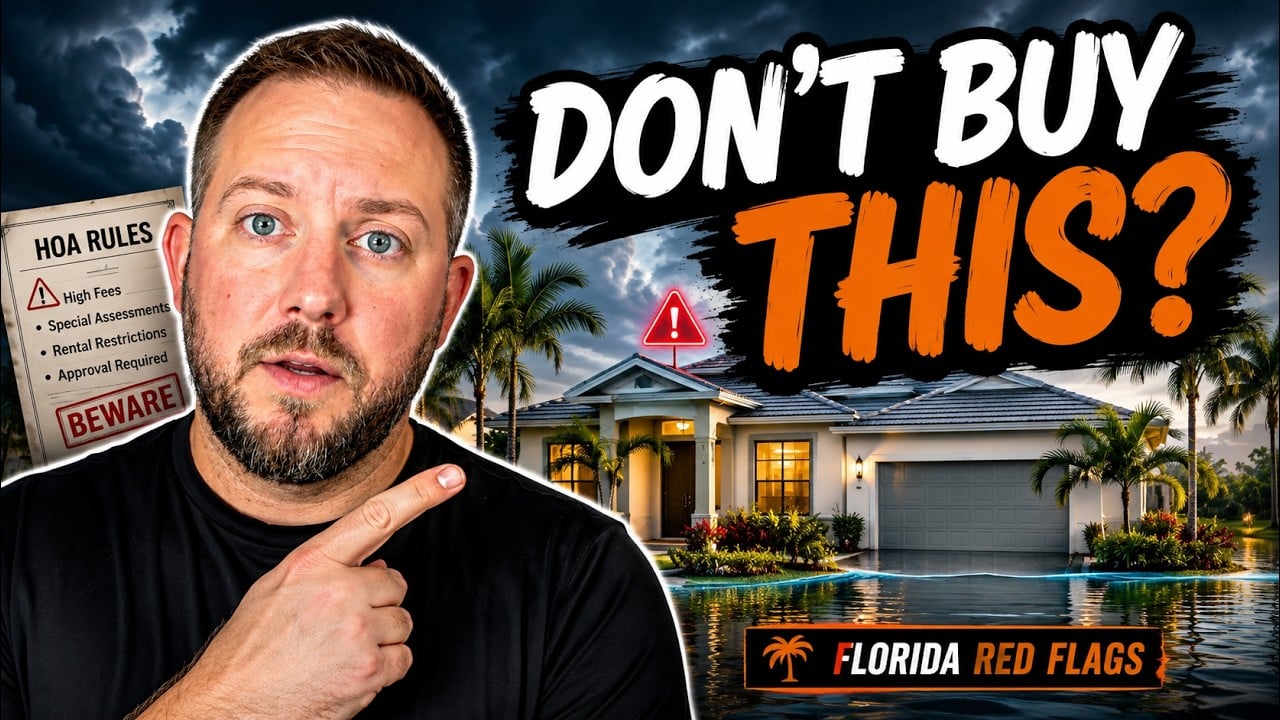
Before buying a home in Florida, there are five critical issues that can cost you tens of thousands of dollars if you don't catch them upfront: high-risk flood zones, aging roofs, problematic HOAs, unfavorable lot orientation, and wood frame construction. These aren't abstract concerns — they're the most common and most expensive mistakes buyers make when relocating to Florida's Gulf Coast, and most people never think about them until after they've already moved in.
Introduction
Florida is an incredible place to live. But buying a home here is meaningfully different from buying a home in most other states — and buyers relocating from out of state often don't realize that until they're already under contract or, worse, already moved in. The things that matter most in Florida aren't always the things that show up in a listing description.
In this guide, you'll discover five specific issues that experienced Gulf Coast real estate professionals pay close attention to before recommending any property to a buyer: flood zone risk and insurance, roof age and insurability, HOA financial health and rules, lot orientation and livability, and construction type. Understanding these five factors before making an offer can save you significant money, stress, and long-term regret. Here's what every Florida homebuyer — especially those relocating from out of state — needs to know.
Frequently Asked Questions: Buying a Home in Florida
What are the biggest mistakes buyers make when purchasing a home in Florida?
The five most common and costly mistakes are: not fully investigating flood zone status and insurance costs before buying; overlooking roof age and its impact on insurance availability; failing to review HOA financials and rules in depth; ignoring lot orientation and how sun exposure and surrounding conditions affect daily life; and choosing wood frame construction over concrete block without understanding the long-term implications for storm durability, insurance, and maintenance.
How does flood zone status affect Florida homebuying?
A property's flood zone classification directly determines whether flood insurance is required and how expensive it will be. In Florida, flood insurance costs have increased significantly in recent years, and some buyers moving from out of state have been blindsided by quotes far higher than anticipated. Beyond cost, buyers should investigate whether a property has a history of actual flooding, its elevation, and whether any flood-risk improvements have been made.
Why do insurance companies care so much about roof age in Florida?
Florida insurance companies scrutinize roof age more than in almost any other state because of the risk posed by hurricanes, tropical storms, and severe weather. A roof approaching the 15-year mark — especially a shingle roof — can become difficult or expensive to insure, even if it still appears to have life remaining. Some buyers have purchased homes assuming a few more years remained on a roof, only to be told by their insurance company they needed to replace it immediately.
What should I look for in a Florida HOA before buying?
Review the HOA's reserve funding, fee history, and recent or pending special assessments. Understand exactly what the fees cover, how often they've increased, and what the community's rules are regarding rentals, parking, fencing, exterior modifications, and pets. A visually attractive community can have serious underlying HOA financial or management issues that directly affect both quality of life and future resale value.
Does it really matter which direction my home faces in Florida?
Yes — more than most buyers from out of state expect. Because of Florida's intense heat and sun, the direction your backyard faces has a real, daily impact on how comfortable your outdoor living areas are. A west-facing backyard offers sunset views but can mean brutal afternoon sun baking your pool, lanai, and patio throughout Florida's long summer. East-facing backyards generally offer morning light and cooler afternoons — often a better fit for buyers who plan to spend significant time outdoors.
Is concrete block construction really better than wood frame in Florida?
For Florida's Gulf Coast climate, concrete block construction is generally preferred over wood frame for several important reasons: better performance during high winds and hurricanes, greater resistance to heat, humidity, and termites, and typically more favorable insurance terms. Most newer Florida homes — especially first-floor construction — are built with concrete block for exactly these reasons. Wood frame homes can still be excellent properties, but buyers should evaluate them carefully from insurance and storm durability standpoints.
Do I need flood insurance in Florida even if the property isn't in a flood zone?
Not legally required — but worth carefully considering. Florida's rainfall, tropical storms, and hurricanes can cause flooding in areas that aren't officially designated high-risk flood zones. Even homes outside FEMA flood zones can experience water intrusion during extreme weather events. Drainage, elevation, and the overall location of the home all matter beyond just the official flood zone designation.
1. Flood Zones: Know the Risk and the Real Cost of Insurance
Why Flood Zone Status Is a Critical First Step
Flood zones are one of the most important — and most frequently misunderstood — factors in Florida real estate. This doesn't mean you should automatically rule out any property in a flood zone. Some of the best locations on Florida's Gulf Coast are in flood-prone areas: waterfront homes, beach-adjacent properties, and homes with water views are often naturally located in higher-risk zones, and many buyers specifically want those locations.
What matters is that you understand exactly what you're getting into before making an offer. Specifically: what flood zone category the property falls in, what that means for required coverage and costs, and what the property's actual flooding history looks like.
Florida Flood Insurance Has Changed Dramatically
Flood insurance costs in Florida have become a much bigger conversation over the past several years. Buyers relocating from out of state — particularly from landlocked states or regions where flood insurance is uncommon — frequently underestimate this cost. The result: they fall in love with a home, negotiate a great price, and then receive a flood insurance quote far higher than expected, fundamentally changing the math on whether the property makes financial sense.
Before making any offer on a Florida property, the questions to investigate include:
- What FEMA flood zone is the property in? (AE, X, VE zones each carry different risk levels and requirements)
- Has the property ever flooded? Has it taken water during past hurricanes or tropical storms?
- What is the home's elevation certificate? A higher elevation relative to the base flood elevation can significantly reduce premiums.
- Is existing flood insurance assumable? Some policies can transfer to a new owner, which can be a valuable financial advantage.
- Has the seller made improvements to reduce flood risk? Elevation work, drainage improvements, or FEMA-compliant construction upgrades can all matter.
Even Outside Flood Zones, Drainage Matters
Importantly, a property not designated in a flood zone doesn't automatically mean you're in the clear. Florida's heavy rainfall, tropical storms, and hurricane activity can cause flooding in areas that aren't formally classified as high-risk. Pay attention to drainage patterns around the property, the elevation of the home relative to its surroundings, and how nearby streets and lots handled major storm events in recent years.
2. Aging Roofs: The Insurance Problem Most Buyers Don't See Coming
Why Roof Age Is a Bigger Deal in Florida Than Anywhere Else
An older roof is a potential financial trap that catches many buyers off guard — and in Florida, the stakes are higher than in most states. Insurance companies operating in Florida are acutely focused on roof age because of the state's hurricane and storm risk. A roof that might appear to have several years of useful life remaining can still become a serious problem when an insurance company evaluates the property.
The scenario plays out like this: A buyer falls in love with a home, the roof looks fine to the naked eye, and the inspection comes back without a crisis-level finding. Then the insurance company weighs in and says the roof is too old to cover at standard rates — or at all — and suddenly the buyer is looking at a roof replacement cost of $30,000, $40,000, or more just to obtain affordable homeowners insurance.
The 15-Year Threshold
In Florida, shingle roofs approaching the 15-year mark tend to be where insurance difficulty begins to appear. Some companies will still cover them, but at significantly higher premiums. Others will decline coverage entirely and require replacement before a policy can be written.
Metal roofs and tile roofs tend to have longer insurable lifespans, though each insurance carrier has its own guidelines. When evaluating any Florida property, the questions to ask include:
- How old is the roof, and what material is it made from?
- Has it had any repairs? Are there permits on file for that work?
- What does the inspection report say about its remaining useful life?
- Has an insurance company already flagged it in any prior transaction?
- What is the cost to replace it, and who would be responsible?
Sometimes paying a little more for a home with a newer roof saves significant money and headaches over the first few years of ownership. A newer roof is one of the most underrated value factors in Florida real estate.
3. HOA Issues: Beautiful Neighborhoods Can Hide Real Problems
Why HOAs Deserve Deep Investigation in Florida
Florida is one of the most HOA-dense states in the country. The vast majority of new and newer communities across Sarasota, Lakewood Ranch, Venice, Wellen Park, and the surrounding Gulf Coast area are governed by HOAs — and many of the most desirable communities have them. Being in an HOA isn't inherently a problem. In fact, many buyers prefer HOA communities because they provide consistent maintenance, organized amenities, and a more cohesive neighborhood appearance.
The issue is when buyers don't look closely enough at the HOA itself before purchasing. A neighborhood can look absolutely beautiful on the surface — manicured landscaping, gorgeous amenities, attractive homes — while carrying underlying financial or management problems that are invisible until you're already a homeowner.
What to Look for in HOA Documents
Before buying in any Florida HOA community, review the following thoroughly:
- Reserve funding: Are the HOA reserves adequately funded, or is the association underfunded relative to its infrastructure needs? An underfunded reserve is one of the leading predictors of future special assessments.
- Fee history: How much have HOA fees increased over the past three to five years? A pattern of significant annual increases is worth noting and asking about.
- Special assessments: Has the community had special assessments in the recent past? Are any currently pending or under discussion?
- Rules and restrictions: What are the specific rules around rentals, parking (particularly trucks and RVs), fencing, exterior modifications, landscaping, and pets? Florida HOA rules vary enormously between communities.
- Financial statements and budget: Is the HOA spending responsibly? Are there large deferred maintenance items that could drive future costs?
A bad HOA can genuinely impact your quality of life in ways that are hard to anticipate from a listing description or a showing. The last thing anyone wants is to move into a beautiful neighborhood only to discover they can't park their vehicle in their own driveway, can't rent the property when they want to, or receive a five-figure special assessment in year one.
4. Lot Orientation: The Permanent Factor Most Buyers Overlook
Why the Lot Matters as Much as the House
Here's a factor that most buyers — especially those relocating from outside Florida — don't think about seriously until after they've moved in: lot orientation. In Florida's climate, the direction your home and backyard face has a real, daily, tangible impact on how you actually live in the property.
And here's the critical point: you can renovate the inside of a house. You cannot move the lot. Whatever lot orientation, road exposure, or surrounding conditions exist when you buy are what you live with permanently.
Sun Exposure and Backyard Orientation
A west-facing backyard sounds appealing in theory — you get those famous Florida sunset views. But it also means brutal afternoon sun baking your pool, lanai, and back patio every single afternoon. During Florida's summer months, that heat is not a minor inconvenience — it can make outdoor living areas nearly unusable during the hottest hours of the day.
Many experienced Florida buyers and residents prefer east-facing backyards because they offer morning sun (pleasant for early outdoor time) while staying considerably cooler through the afternoon and evening — the prime hours for pool and patio enjoyment. For buyers who plan to spend significant time in their outdoor living spaces, this matters more than almost any interior finish.
Beyond Sun: Other Lot Conditions to Evaluate
Sun orientation is just the starting point. A thorough look at any Florida property's lot should also consider:
- Road noise: Does the home back up to a busy street, highway, or commercial corridor?
- Retention ponds: Many Florida communities have retention ponds, which can affect both aesthetics and mosquito presence depending on location.
- Power lines: Overhead power lines behind or adjacent to a lot affect views and can affect property values.
- Privacy: How close are neighboring homes? Is there meaningful vegetation or buffering, or are homes tightly packed with minimal separation?
- Drainage patterns: Does the lot sit higher or lower than surrounding properties? Low-lying lots can accumulate water during heavy rain events.
Spend time at any property you're seriously considering — at different times of day if possible — thinking about how you'll actually live in and around it day to day. That time investment before buying is far less expensive than discovering a problem after closing.
5. Wood Frame Construction: Why Concrete Block Is Preferred on Florida's Gulf Coast
The Construction Type Question
Construction type is a topic that can generate debate, and it's worth stating upfront: not every wood frame home is a poor purchase. There are beautiful, well-maintained wood frame homes throughout Florida — many older homes with genuine character are wood frame construction, and some buyers specifically seek them out.
That said, when given the choice between concrete block and wood frame construction in Florida's Gulf Coast climate, concrete block is the preferred option — and there are specific, practical reasons why.
Why Concrete Block Performs Better in Florida
Florida's Gulf Coast climate presents a combination of conditions that particularly favor concrete block:
- Hurricanes and high winds: Concrete block construction generally performs better under the extreme wind loads produced by Gulf Coast hurricanes and tropical storms.
- Heat and humidity: The persistent heat and high humidity of Florida's climate can be harder on wood frame structures over time, particularly with regard to moisture intrusion, rot, and related maintenance issues.
- Termites: Florida's termite activity is among the highest in the country. Concrete block is significantly less vulnerable to termite damage than wood framing.
- Wind-driven rain: During major storm events, wind-driven rain can penetrate vulnerable points in wood frame construction more readily than it does in properly constructed concrete block homes.
This is precisely why the vast majority of newer Florida homes — particularly at the first-floor level — are built with concrete block construction. Builders and insurers alike have converged on concrete block as the preferred standard for good reason.
How Construction Type Affects Insurance and Maintenance
Beyond storm performance, construction type can affect insurance rates, maintenance costs over time, and long-term resale appeal. Some insurance carriers differentiate premiums based on construction type. And over the decades of a home's life, the maintenance demands of wood frame construction in a high-heat, high-humidity, termite-active environment can add up meaningfully.
For buyers evaluating an older wood frame home, the question isn't automatically "don't buy this." It's "what does the inspection reveal about the current condition, and do I understand the potential long-term maintenance and insurance implications?"
How These Five Factors Work Together
Individually, any one of these five issues is manageable with the right information and the right team guiding the process. The challenge for buyers relocating from out of state is that all five of these factors are less visible and less understood than they would be for a longtime Florida resident. They don't show up in listing photos. They don't come up in casual conversation at open houses. And they can collectively represent tens of thousands of dollars in unexpected costs if they're not investigated before an offer is made.
The goal isn't to make any of these factors sound like automatic deal-breakers — they're not. Every home involves trade-offs, and sometimes a property checks every box except one and still makes perfect sense for a specific buyer's situation. The key is understanding the trade-offs before you buy, not after.
A great local agent who knows the Gulf Coast market — the specific flood histories, the insurance landscape, which HOAs are well-managed, which communities have which construction standards, how lot orientations vary by neighborhood — can turn these five potential landmines into simply five more factors in a well-informed buying decision.
Conclusion: Florida Is Different — Buy It That Way
Buying a home in Florida is genuinely different from buying a home in most other states. The weather, the insurance environment, the HOA landscape, the construction standards, and the lifestyle factors all combine to create a market where local knowledge isn't just helpful — it's financially significant.
The five issues covered in this guide — flood zones and insurance, roof age, HOA health, lot orientation, and construction type — are the ones that experienced Gulf Coast professionals look at closely on every single property. They're the issues that surprise buyers most often, and they're the ones where being informed upfront makes the biggest difference.
Florida is an extraordinary place to live. Getting there the right way just takes knowing what to look for.
Ready to Buy a Home on Florida's Gulf Coast?
If you're considering relocating to Sarasota, Venice, Lakewood Ranch, Wellen Park, or anywhere else on Florida's beautiful Gulf Coast, the Zachos Realty & Design Group is here to help. With over 40 years of local expertise and a unique combination of real estate knowledge and award-winning design vision, we can help you find the perfect property that matches your lifestyle needs.
Contact us today:
- Phone: 941-500-5457
- Email: [email protected]
- Sarasota Office: 205 N Orange Ave Suite 202, Sarasota, Florida 34236
- Venice Office: 217 Nassau St S, Venice, FL 34285
Visit our YouTube channel "Relocation Experts | Florida's Gulf Coast" for more insider guides to Florida's Gulf Coast communities.
Check out this article next