



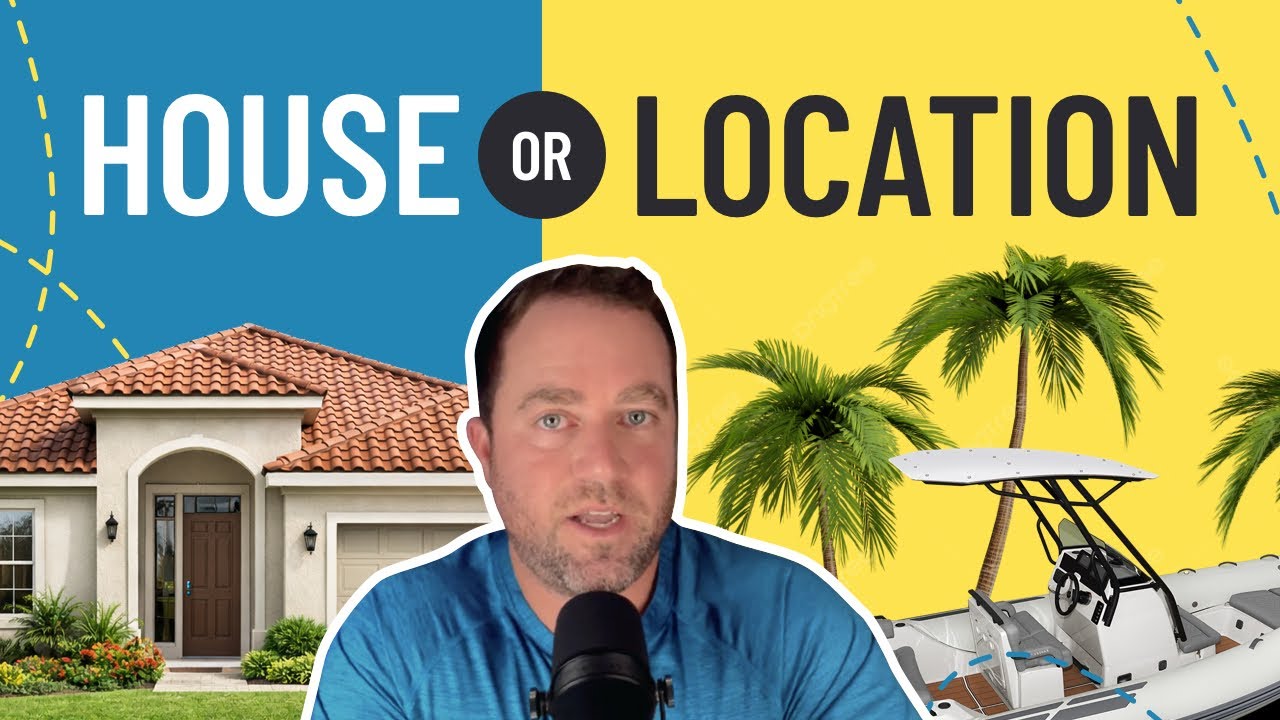
There's a conversation that happens over and over again with buyers relocating to Florida's Gulf Coast. It goes something like this: a buyer knows exactly what they want — beach proximity, new construction, a reputable builder, design center options, and a budget under $600,000. All of that is completely achievable. Communities that check every one of those boxes exist on the Gulf Coast right now.
Then the real conversation starts. They also want a $150,000 pool. A bigger house. More square footage. More upgrades. And instead of adjusting the house, they start looking an hour inland.
That moment — when the house starts winning against the geography — is one of the most consequential decisions a Florida relocation buyer makes. And most people don't realize they're making it until they're already under contract.
Here's the principle that should anchor your entire Florida search: you can upgrade a kitchen, add a pool heater, and finish a bonus room. You cannot move the beach closer. You cannot move the airport closer. You cannot move downtown closer.
Geography is permanent. The house is adjustable. And this guide is about making sure you're clear on which one matters most to you before you fall in love with granite countertops and a big backyard.
Frequently Asked Questions: House vs. Geography in Florida
Why does geography matter more than the house in Florida real estate?
In most markets, you can renovate your way to a better house. In Florida's Gulf Coast market, you cannot renovate your way to better geography. Beach proximity, airport access, downtown walkability, and coastal lifestyle are fixed by location — and no amount of renovation changes them. Buyers who optimize for the house and compromise on geography frequently find themselves in a beautiful home in a location that doesn't match the lifestyle they moved to Florida for. The reverse — living with a more modest house in exactly the right location — is typically a much easier adjustment.
What is the trade-off between new construction and beach proximity in Florida?
This is one of the most common trade-offs on the Gulf Coast. New construction in Florida has generally been pushed away from the coast as available land has been developed. In markets like Tampa, the largest master-planned new construction communities are 60 or more minutes from Gulf beaches. In Naples, more affordable new construction has shifted toward Fort Myers and Estero, away from the water. Sarasota County is the notable exception — communities like Lakewood Ranch, Palmer Ranch, Wellen Park, and the North Venice corridor offer new construction within 20 to 30 minutes of the Gulf, which is why this corridor has grown so rapidly.
Should I prioritize the house or the location when buying in Florida?
The honest answer depends on which of four pillars matters most to you: geography (beach proximity, airport access, downtown access), the house itself (square footage, pool, upgrades, new construction), social lifestyle (community amenities, neighbors your age, pickleball courts, event calendar), or budget (price per square foot, overall price point). There is no universally correct answer — but there is a right answer for your specific priorities. The problem arises when buyers try to optimize for all four simultaneously without acknowledging the trade-offs between them.
Are inland Florida communities a bad choice?
No — inland communities serve specific buyer profiles very well. Places like Parish, Babcock Ranch, North Fort Myers, and Port Charlotte can deliver more square footage, brand new construction, master-planned amenities, and lower price per square foot than coastal areas. For families with children who need space and yard, or buyers whose lifestyle doesn't center on daily beach access, these areas can make genuine sense. The key question is simply: are you comfortable being 45 minutes to an hour from the water every single day? That's the part buyers frequently don't emotionally calculate before committing.
What does "geography is supply constrained" mean for Florida home values?
Coastal and near-coastal areas in Florida are supply constrained by definition — there is a finite amount of land within practical distance of the Gulf, and it cannot be meaningfully expanded. This supply constraint historically supports long-term appreciation in well-established coastal communities. Inland master-planned communities, by contrast, can expand by building more phases, more communities, and more roads — growth that increases supply and creates a different long-term appreciation dynamic. Neither is inherently better, but the mechanisms are different and worth understanding when making a 10- or 20-year property decision.
How do I know if beach proximity is truly important to my lifestyle?
The most useful question is not "do I want to live near the beach?" — nearly everyone answers yes to that. The more honest question is: what does your Tuesday look like? Not a vacation week. Not when family is visiting. A regular, unremarkable Tuesday. Are you walking on the beach three times a week, or is the beach something you'll get to once a month? If beach access is genuinely part of your daily identity, proximity matters enormously. If it's more of a background feature you enjoy occasionally, more distance may be a perfectly acceptable trade-off for a better house.
The Trade-Off Nobody Calculates
Ryan Zachos has worked the full Gulf Coast corridor for years — born and raised in Sarasota, currently in Lakewood Ranch, with deep familiarity across every market from Tampa to Naples. And the pattern he sees consistently is buyers who optimize for the house and compromise on geography, often without fully understanding what they're giving up until after closing.
The buyer story at the beginning of this guide is typical. Everything was achievable within the stated priorities. The trade-off happened when the priorities expanded — more upgrades, a bigger pool, more square footage — and the compromise was geography rather than the house. The beach didn't move. The airport didn't move. The buyer just ended up farther from them.
The problem isn't that inland communities are bad. They're not. For the right buyer, they're genuinely the right choice. The problem is when buyers drift inland to chase a bigger house without consciously acknowledging what they're trading away — and then discover six months later that the lifestyle they moved to Florida for isn't actually accessible from where they live.
The Four Pillars: What Actually Matters to You?
Before any conversation about specific communities or floor plans, there's a more fundamental question to answer. When you imagine your Florida life, which of these four things is non-negotiable?
Geography Beach proximity. Airport access. Proximity to downtown Sarasota, St. Pete, or Tampa. If you're the type of person who wants to walk on the beach three times a week, or who travels north frequently and needs convenient airport access, or who wants the restaurants and culture of a real city nearby — geography is your pillar. Compromising on it will be felt every day.
The House Square footage. A pool. High-end upgrades. A larger lot. New construction with full design center customization. If your home is your sanctuary and the quality of the space you live in daily is what defines your experience, the house is your pillar. Compromising on it will be felt every time you're home.
Social Lifestyle Neighbors your age. Pickleball courts. A social event calendar. A clubhouse with a restaurant and bar. Community-organized activities and a built-in social network. If the community itself — the people, the programming, the daily social environment — is what you're moving to Florida for, social lifestyle is your pillar. Many of the best communities for this are inland, because that's where the large master-planned communities with the most robust amenity programs are being built.
Budget Price per square foot. Total purchase price. HOA and CDD fee levels. Monthly carrying costs. If budget discipline is the constraint that shapes everything else, acknowledging that clearly at the start leads to much better decisions than discovering it after falling in love with a community that doesn't fit.
The key insight: you can usually have strong performance on two or three of these pillars. You almost never get all four simultaneously at the same level. The buyer who wants exceptional geography, a large new construction home, full resort amenities, and a below-market budget is asking the market to do something it can't do. The buyers who are happiest with their Florida decisions are the ones who identified their non-negotiable pillar early — and then found the best available option within that constraint.
Where Lakewood Ranch and Wellen Park Fit This Framework
The reason Lakewood Ranch and Wellen Park have grown the way they have is that they've found a genuine middle position in this framework — closer to the geography pillar than most new construction communities, while still delivering the social lifestyle and house quality pillars.
You're not on the beach. But you're 20 to 30 minutes from it, depending on traffic and where in the corridor you are. You're near airports. You're near restaurants and social energy. You have new construction, resort-style amenities, and master-planned community infrastructure — without sacrificing the geography to the degree that fully inland communities require.
That combination is genuinely uncommon on the Gulf Coast at scale, and it's the primary reason both corridors continue to attract buyers from across the country.
For buyers who need to be directly on or immediately adjacent to the beach — Venice Island, Longboat Key, Siesta Key, Casey Key — the new construction options largely don't exist at the same price points. Those areas are supply constrained, which is part of why their long-term appreciation profile is different. Resale in those areas is typically the path, and the house will be more modest for the same budget.
For buyers who prioritize the social lifestyle pillar above the geography pillar, communities further inland — with larger amenity campuses, more robust programming, and lower price per square foot — may genuinely serve them better than near-coastal options.
Neither is wrong. They're just different answers to different versions of the question.
The Appreciation Argument
The long-term value dimension of this conversation deserves honest treatment, because it affects more than just lifestyle.
Coastal and near-coastal Florida markets are supply constrained. There is only so much land within practical distance of the Gulf, and that constraint doesn't change. When demand rises — as it has consistently over Florida's history — supply-constrained areas tend to hold and appreciate more reliably than areas where supply can expand freely.
Inland master-planned communities can grow by adding phases, opening new communities, and extending infrastructure. That growth is part of their appeal — they're alive, expanding, filling in. But it also means supply can increase alongside demand in ways that coastal areas can't. As Ryan notes: "You're not building another Venice Island." That scarcity has real long-term implications.
This isn't a categorical argument that coastal is always the better investment — there are buyers for whom inland growth areas have performed extremely well, and there are coastal properties that have underperformed expectations. But the underlying supply dynamic is real and worth factoring into a decision that's meant to serve you for a decade or more.
What Your Tuesday Looks Like
The most clarifying question in this entire framework is the simplest one: what does your Tuesday look like?
Not the vacation week. Not when family is visiting. Not the highlight reel of the Florida life you're imagining. A normal, unremarkable Tuesday.
Where are you getting coffee? Where are you driving to dinner? Are you actually walking on the beach — or is the beach something you'll do when the mood strikes, maybe once a month? Is your morning about hitting the pickleball courts or taking a walk in your neighborhood? Are you working from home and primarily inside your house, or are you out in the community and the broader area most of the day?
The answers to these questions tell you more about the right geography and community type than any spec sheet or listing description. And they're questions worth sitting with honestly before you book flights to look at model homes.
Because once you're standing in a well-staged house with granite countertops, a large backyard, and a well-practiced sales presentation, the emotional pull of the structure is real and powerful. The distance to the beach becomes an abstract number. The commute to the airport becomes something you'll manage. The absence of the restaurant scene you wanted becomes something you'll get used to.
And sometimes those adjustments are fine — the house really was the right pillar, and the trade-offs genuinely don't bother you. But sometimes they do bother you, and by then you're already in the house.
Practical Steps Before You Start Looking at Houses
Based on this framework, the most productive way to approach a Florida relocation search:
- Identify your primary pillar. Geography, house, social lifestyle, or budget — rank them honestly, not aspirationally. The one you'd be most bothered by compromising is your primary pillar.
- Define your geography non-negotiables. Maximum drive time to the beach. Airport access requirements. Downtown proximity needs. Set these as real constraints before you look at a single floor plan.
- Understand what the geography costs. Beach proximity has a price in Florida. Near-coastal areas cost more per square foot than inland areas. Knowing this upfront allows you to make a clear choice rather than discovering it mid-search and adjusting your geography downward to save budget.
- Define what "adjustable" means in the house. A pool can be added after closing, usually within a year. Square footage cannot be added easily. Lot size is fixed. Upgrades can be added over time; some structural choices can't be changed. Know which house features are negotiable and which aren't.
- Visit the geography before you visit the houses. Drive the commute to the beach on a Saturday. Visit the downtown you're planning to use. Understand what 20 minutes vs. 35 minutes to the water feels like in real life, on real roads, in real traffic. Then look at houses.
Conclusion: Geography Is Hard to Undo
The buyers who are happiest with their Florida moves are the ones who had this conversation before they started looking — not the ones who had it after they were already under contract on a house in the wrong location.
Geography is hard to undo. You can renovate a kitchen in three months. You cannot move the beach.
If you're in the middle of this decision right now — weighing the house against the location, wondering whether the inland option is worth it for the extra square footage, trying to figure out which trade-off you can actually live with — that's exactly the conversation worth having before you book the next trip to look at model homes.
Ready to Think Through the Right Geography for You?
Ryan Zachos and the Zachos Realty & Design Group team specialize in helping relocation buyers navigate exactly this decision — matching your lifestyle priorities to the right geography before you ever fall in love with a specific house. With over 40 years of combined local expertise and deep knowledge of every corridor from Tampa to Naples, the team helps buyers get it right the first time.
Contact us today:
- Phone: 941-500-5457
- Email: [email protected]
- Sarasota Office: 205 N Orange Ave Suite 202, Sarasota, Florida 34236
- Venice Office: 217 Nassau St S, Venice, FL 34285
Visit our YouTube channel "Relocation Experts | Florida's Gulf Coast" for more insider guides to Florida's Gulf Coast communities.
Check out this article next